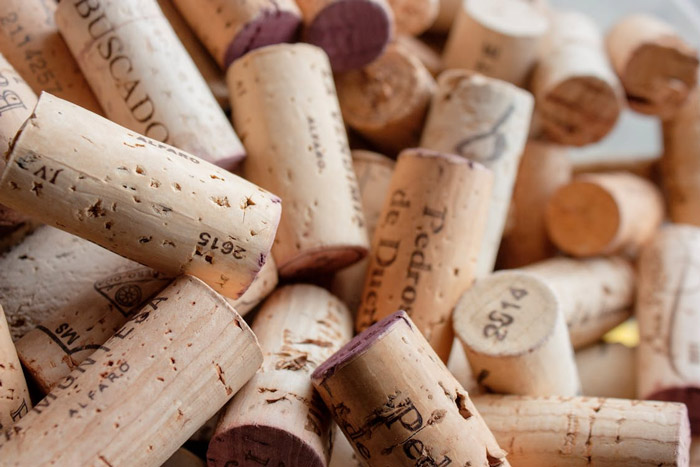
When opening a bottle of aged fine wine, do you casually discard the cork just removed from the bottle? In fact, this often overlooked “supporting role” is far more than just a seal. It acts like a silent guardian, witnessing the entire journey of the wine from production and aging to the moment it is opened.
This means we can gain insight into a wine’s origin, age, and potential through the material, craftsmanship, and storage condition of the cork:
Cork Material: Different cork materials directly influence the wine’s style, cost, and optimal drinking window.
● Natural Cork
Natural cork is harvested from the bark of the cork oak tree, a material with centuries of use. High-quality natural cork exhibits a fine, uniform texture, good elasticity, and evenly distributed microscopic pores. Premium wines often opt for longer (over 50mm) and denser natural corks, indicating the winery’s investment in long-term aging.
Notably, natural corks are often printed with the winery’s name, vintage, or even label motifs. The clarity and durability of these prints reflect the winery’s attention to detail. Top estates may use laser engraving or special inks to ensure the design remains legible for decades.
● Agglomerated Cork
Made from compressed cork granules, agglomerated corks are more affordable than natural ones. However, they are not always associated with lower quality. Many mid-priced wines intended for early consumption use this type, as they provide consistent sealing and nearly eliminate the risk of cork taint associated with traditional corks.
● Screw Cap
Once controversial due to a “cheap” image, screw caps are now chosen by many premium wineries, especially from New World regions. They offer an absolutely stable seal, particularly suitable for white wines and some reds emphasizing fresh fruit character. Finding a screw cap on a high-priced wine often signals the winemaker’s clear intention: to preserve purity and consistent flavor.
● Glass Stoppers and Synthetic Corks
In recent years, glass stoppers and various synthetic corks have emerged. These innovative closures typically indicate a winery’s willingness to adopt new technologies for more stable quality. While currently more common in mid-priced wines, they may point to future trends in wine closure technology.
Cork Condition: After extraction, carefully examining its physical state can reveal storage conditions and potential quality issues.
● Saturation Level: Generally, saturation not exceeding one-third of the cork’s length suggests ideal storage (horizontal positioning). Uneven or excessive saturation may indicate upright storage or temperature fluctuations, potentially harming the wine. However, for wines aged for decades in high-humidity cellars, saturation may reach half or more of the cork—this is a natural result of prolonged aging, not poor storage.
● Aroma: Gently sniffing the cork is a standard practice for sommeliers. A fresh cork should have only a faint woody scent. Notes of wet cardboard, mold, or vinegar may indicate cork taint, improper storage, or spoilage. Interestingly, some aged wines’ corks may carry mature aromas similar to the wine itself, often a positive sign.
● Elasticity and Integrity: A high-quality cork should remain intact, elastic, and resistant to crumbling after extraction. A dry, brittle cork likely suggests low-humidity storage, potentially leading to oxidation and quality loss. Conversely, an overly soft or damp cork may indicate excessive humidity, raising the risk of mold contamination.
Cork Information: Printed details and markings on the cork often provide clues about the wine’s grade and authenticity.
● Winery and Region Information: Many corks display the winery name, region, or even vineyard details. The accuracy and specificity of this information often correlate with the wine’s tier. For instance, a wine labeled with only a broad region typically differs significantly in price and aging potential from one specifying a single vineyard or precise plot.
● Vintage Indication: Not all wines show the vintage on the cork. A clear vintage mark usually indicates a wine with aging potential that the winery wishes consumers to recognize. For older vintages, the cork’s year is a key authentication detail.
● Special Markings and Certifications: Some corks feature symbols for sustainability, organic, or biodynamic farming, reflecting the winery’s philosophy and potentially impacting price. Additionally, top estates may use specially designed corks for exceptional vintages, turning these “limited edition” corks into collectibles.
How to Assess the Value of Wine Through the Cork?
Perspective 1: Cost Reflection
A high-quality natural cork can cost €2–3, while a basic agglomerated cork may be just a few cents. For large-production wines, this difference significantly affects pricing. A winery’s investment in the cork indirectly reveals its positioning and expectations for the wine.
Perspective 2: Indicator of Aging Potential
Wines suited for long-term aging require high-quality natural corks that allow “breathing”—minute amounts of oxygen to enter slowly, facilitating gradual evolution. If an expensive wine uses an agglomerated cork or screw cap, it likely means the winemaker intends it for earlier consumption, not extended aging.
Perspective 3: Extension of Brand Image
Luxury brands understand the power of details, and top wineries are no exception. A meticulously designed, premium-feeling cork enhances the consumer experience and reinforces a high-end brand image. Some wineries even create unique corks for different product lines, integrating them into their brand identity.
Perspective 4: Clue to Investment Value
For wine investors, cork condition is crucial in assessing storage history and authenticity. An older vintage with a well-preserved cork, appropriate saturation, and clear printing can fetch multiples at auction compared to a similar wine with a compromised cork.
Despite the rich information corks provide, we must acknowledge their limitations. In modern winemaking, some estates choose different closures for the same wine in different markets. Moreover, an increasing number of wineries select closures based on wine style rather than price alone.
True wine connoisseurs understand that the cork is just one of many clues in assessing value. Ultimately, a wine’s worth lies in its performance in the glass: the complexity of its aroma, the balance on the palate, the persistence of its flavors, and most importantly—the joy and emotion it brings to the drinker.
