
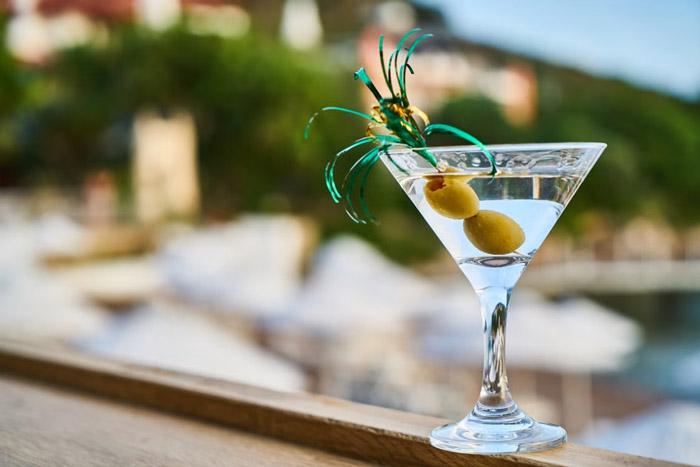
Stepping into an elegant bar in Hong Kong—or any cosmopolitan city—and ordering a Martini is often seen as a statement of refined taste and self-assurance. Renowned as the “King of Cocktails,” this timeless classic has held its ground throughout history, from James Bond’s iconic “Shaken, not stirred” to the modern craft cocktail renaissance. Yet, many people’s impression of it remains stuck at “extremely stiff,” “meant to be downed in one shot,” or “loaded with olives,” overlooking the true elegance and rich nuance it has to offer.
Why is the Martini Called the “King of Cocktails”?
“A Martini is the only American invention as perfect as a sonnet.”
— H.L. Mencken, American Author
The title “King of Cocktails” is by no means an exaggeration. Built around a core of gin (or vodka) paired with dry vermouth, the Martini features a minimalist structure with endless possibilities, making it the ultimate archetype of cocktails. Its origins are steeped in lore: some trace it back to the late 19th century in the small town of Martinez, California; others believe it evolved from the earlier Martinez Cocktail; while the classic recipe from London’s Savoy Hotel left a profound mark. By the mid-20th century, propelled by Hollywood and the 007 franchise, it became a global symbol of sophistication, composure, and urban charm.
Interestingly, early Martinis were considerably “wetter” (containing a higher proportion of vermouth). Over time, they leaned progressively “drier,” elevating the ratio of gin—giving rise to extreme renditions where vermouth merely “waves” at the glass. It is precisely this versatility—wet or dry, shaken or stirred—that empowers both bartenders and drinkers to co-create their own interpretation of the “King.” In a fast-paced, style-conscious city like Hong Kong, ordering a chilled, crystal-clear Martini is more than just having a drink; it is a brief yet complete sensory ritual.
Mistakes You Might Be Making: 3 Common Traps for Beginners
Many newcomers base their first impression of a Martini on suave movie tropes, inadvertently falling into a few common missteps:
Mistake 1: Treating it like a sweet cocktail and knocking it back in one gulp
A Martini typically carries an alcohol content of 30% to 35% ABV, which is practically drinking chilled neat spirits. If you gulp it down like a Mojito or a Highball, you won’t be able to appreciate its flavor profile—and you run a high risk of over-drinking.
Mistake 2: Nursing it too long while chatting
The soul of a Martini lies in its extreme coldness. As time passes and the temperature rises, the herbal notes of the vermouth and the sharp punch of the alcohol become unpleasantly pronounced.
Mistake 3: Ordering blindly and getting overwhelmed by the bite
The Martini is highly customizable. If you simply ask the bartender for “a Martini,” you will likely receive the most classic version—dry and spirit-forward—which can easily overwhelm a beginner.
The Proper Way to Drink It: Temperature, Glassware, and Pace
The key to mastering the Martini comes down to ice and pacing.
The ideal serving temperature ranges between -2°C and 4°C (28°F to 39°F)—the liquid must be intensely cold without freezing solid. Professional bars will first chill the glassware (a classic V-shaped Martini glass or a Coupe glass), then stir the mixture vigorously with ice in a mixing glass for 30 to 60 seconds to achieve the perfect dilution and chill before straining. While stirring is traditionally preferred for keeping the texture silky and crystal clear, those who favor Bond’s shaken method accept that it yields a slightly lighter, more aerated drink.
In terms of glassware, a stemmed Martini or Coupe glass minimizes heat transfer from your hands, keeping the drink frosty. Popular garnishes include olives (a Dirty Martini includes a splash of olive brine) or an expressed lemon twist.
When tasting, take a light whiff of the aroma first, then sip slowly. Allow the liquid to rest on your palate for a few seconds to experience the transition from a crisp, icy entry to a warm, botanical finish. Ideally, finish your drink within 10 to 15 minutes to prevent warm temperatures from spoiling the flavor profile.
If you are practicing at home, pre-chilling your glass in the freezer or slightly chilling your base spirit in advance works exceptionally well.
Flavor Profile Decoding: A Sensory Journey from Nose to Finish
The true pleasure of a Martini lies in its minimalist complexity.
Nose: A quality gin brings notes of juniper, citrus peel, herbs, and subtle spice, while dry vermouth adds depth with floral, medicinal, and gently bitter nuances.
Palate: The icy chill seizes your senses first, followed by the crisp bite of alcohol balanced softly by the vermouth. Mid-palate, you might catch subtle hints of sweetness or a savory touch (if garnishing with olives).
Finish: It leaves a clean, botanical aftertaste with a gentle lingering warmth.
To train your palate, try comparing different ratios: a standard Dry (around 5:1 or 6:1), a “wetter” 50/50, or a variation with orange bitters. Pay attention to the viscosity—a well-stirred Martini feels silky rather than watery. Hong Kong bars frequently feature exceptional local or imported craft gins. Try keeping track of the brands and proportions you enjoy, and over time, you will define your own “perfect Martini.”
Social Etiquette: How to Order and Drink Elegantly at the Bar
Ordering a Martini at a bar is an exercise in subtle sophistication. Simply inform your bartender:
“Gin (or Vodka) Martini, Dry, Stirred, with a twist (or olive).”
For greater precision, feel free to specify your preferred brand or ratio.
A Quick Guide to Order Terminology:
– Dirty Martini: Includes olive brine.
– Gibson: Garnished with a cocktail onion.
– Perfect Martini: Uses an equal mix of sweet and dry vermouth.
Using these terms helps the bartender immediately understand your preferences.
Maintain your grace while drinking: hold the glass gently by the stem to avoid touching the bowl. You can lightly clink rims with friends, but there is no need to rush a toast. In formal settings, a Martini serves wonderfully as an aperitif before a meal, whether paired with light bites or enjoyed on its own.
Remember, true sophistication lies in respecting both the drink and the people around you—don’t rush your bartender, don’t judge others’ choices, and always drink in moderation.
The allure of the King of Cocktails doesn’t stem from an elaborate recipe, but from how it uses the simplest elements to achieve precise balance and ritual. From understanding its heritage and avoiding beginner mistakes to mastering temperature, pace, and etiquette, every step elevates your drinking culture.
The next time you walk into a bar or mix one at home, remember: true taste comes from mindful appreciation, not from trying to look like an expert.
