
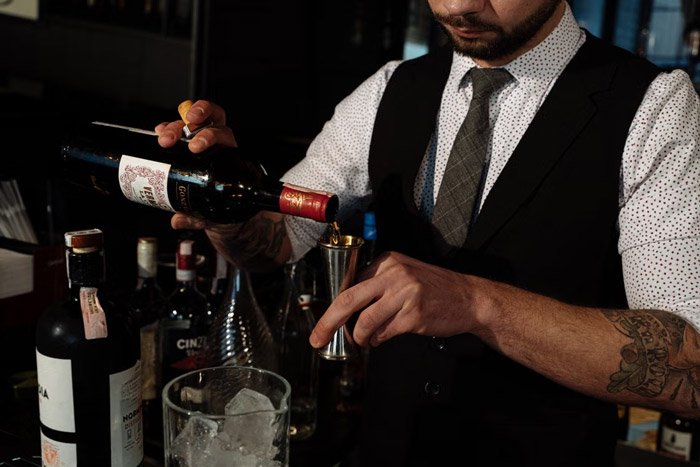
Many believe that assessing cocktail quality requires extensive industry jargon or a highly refined palate. In reality, mixology is an art form blending aesthetics, physics, and obsessive attention to detail. Experienced drinkers evaluate quality within seconds of receiving their glass, relying entirely on subtle visual cues.
Visual Test 1: Ice Clarity—The Bar’s “Physical Fundamentals”
To evaluate a bar’s professionalism in three seconds, look directly at the ice in your glass.
1. Ice Transparency: Cloudy vs. Crystal Clear
Cloudy Ice: Freezer ice contains trapped air and impurities in its center. It melts rapidly, quickly diluting the cocktail and rendering its flavor flat within minutes.
Crystal-Clear Ice: Professional “aged ice” or hand-carved blocks are dense, hard, and as clear as crystal. The slow melt rate maintains an ideal temperature and stable flavor balance.
2. Ice and Glassware Compatibility
Observe whether the ice fits the glass seamlessly. A classic Old Fashioned served with small, cracked, irregular cubes results in uncontrolled dilution. Conversely, a hand-carved ice sphere or block fitted neatly against the glass walls demonstrates extreme dedication to temperature and dilution control.
Visual Test 2: Glassware & “Legs”—The Structure and Soul
Glassware serves as a tailored flavor amplifier and thermal insulator for the drink.
| Glass Type | Suitable Cocktails | Key Quality Indicators |
| Martini Glass | Martini、Manhattan | Pre-chilled/frosted walls, no fingerprints |
| Collins Glass | Highball、Gin Tonic | Packed full with ice, persistent carbonation |
| Rocks Glass | Old Fashioned | High ice clarity, ideal liquid-to-ice ratio |
Look for these additional indicators:
Pre-chilling (Frosting): Pouring a freshly shaken drink into a glass should immediately create a fine mist on the outer surface. Room-temperature glassware spikes the liquid’s temperature, ruining the chilled texture.
Viscosity and “Legs”: Tilt and swirl the glass gently to watch how the liquid recedes. Light-bodied drinks (e.g., Highballs) should remain exceptionally clear with fine bubbles rising continuously. Richer cocktails (e.g., Manhattans) should coat the glass with smooth, uniform “legs,” signaling a balanced texture of alcohol, sugar, and acidity.
Visual Test 3: The Kinetics of Shaking and Stirring
A bartender’s movement controls three variables: temperature, aeration, and dilution.
1. Shaking: Creating a Vortex, Not Forceful Slapping
A professional shake features a rhythmic circular motion, forcing ice into a vortex inside the shaker.
Superior Technique: Incorporates air seamlessly, producing a velvety layer of micro-foam on top for a smooth mouthfeel.
Inferior Technique: Crushes ice into debris inside the shaker, leaving unwanted floating ice chips that dilute the drink quickly.
2. Stirring: The Art of Silent Motion
For spirit-forward cocktails (e.g., Martini, Negroni), bartenders use a bar spoon to stir.
Key Observation: Stirring should be completely silent. The back of the spoon stays flush against the glass wall, smoothly rotating the ice to chill the liquid without clouding its clarity.
Visual Test 4: Garnishes and Station Hygiene
The final crucial details lie in the citrus peel or botanical garnish:
Precision of the Twist: Expressing a citrus peel over the glass should release a fine mist of essential oils onto the liquid’s surface. Properly trimmed peels enhance aroma, whereas jagged edges or excess white pith introduce harsh, dull bitterness.
Bar Hygiene & Workflow:
1. Countertop & Towels: Is the workspace kept dry and clean?
2. Tool Maintenance: Are jiggers and shakers rinsed immediately after use?
3. Ice Handling: Are ice tongs or scoops used consistently instead of bare hands?
Summary: The 3-Second Quality Checklist
Next time you order a drink, quickly verify these four points:
1. Ice: Is it crystal clear and sized correctly for the glass?
2. Glassware: Is it pre-chilled with a frost layer and free of streaks?
3. Liquid: Is there fine micro-foam (shaken) or a crystal-clear surface free of ice debris (stirred)?
4. Detail: Is the garnish neatly prepped, releasing immediate aroma upon service?
Mastering these visual cues allows anyone to evaluate cocktail quality instantly. Observing these subtle details elevates the entire drinking experience.
